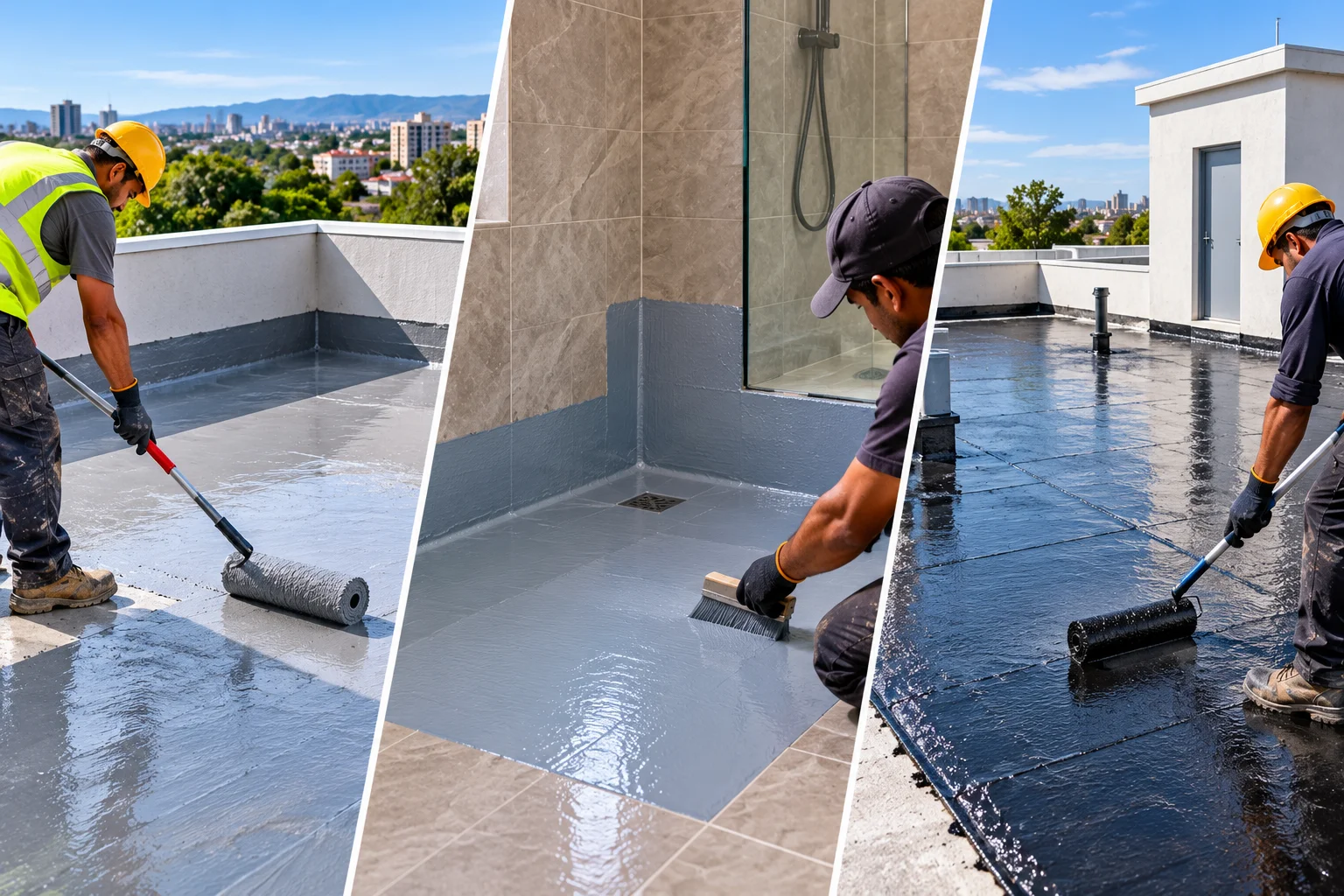
Waterproofing works best when the system is selected for the water exposure, substrate and construction detail—not simply by choosing a coating with a familiar name. Terraces, roofs and bathrooms face different conditions, so the material and application sequence should follow the product’s technical data sheet and the project specification.
Start with the source of water ingress
Before choosing a solution, inspect where water enters, whether cracks or failed joints are present, the condition of the substrate, drainage and slope, and whether previous waterproofing layers are loose or damaged. Active leaks, structural cracks and poorly detailed pipe penetrations may need repairs before a membrane is installed.
Terrace and roof waterproofing
Terraces and exposed roofs experience rain, standing water risk, sunlight and temperature changes. The design may call for a liquid-applied membrane, a sheet membrane or another specified waterproofing system. Review compatibility with the substrate, UV exposure, detailing at parapets and drains, required dry-film thickness, reinforcement requirements and the protection layer required above the waterproofing.
Globe Construction Chemicals offers products in its waterproofing range, including Flexicoat, described for outdoor waterproofing applications. Confirm current product limitations, coverage and application conditions from its TDS before specifying or applying it.
Bathroom waterproofing
Bathrooms need careful treatment around floor-wall junctions, corners, drains, pipe penetrations and thresholds. The selected system must be compatible with the substrate and the tile adhesive or finish that will be installed above it. Follow the specified number of coats, drying time and any flood-test requirement; do not cover the membrane before it has reached the required condition.
Common system checks
- Surface preparation: Remove dust, loose material, oil and weak coatings; repair defects as specified.
- Moisture and slope: Confirm substrate moisture limits and positive drainage where required.
- Joints and penetrations: Detail corners, outlets, drains and pipe entries with compatible accessories.
- Coverage and thickness: Measure usage against the stated coverage and specified film thickness.
- Curing and protection: Respect recoat, curing, testing and covering times from the TDS.
- Compatibility: Confirm compatibility with primers, sealants, screeds, tile adhesives and topcoats.
Why waterproofing failures happen
Common causes include inadequate preparation, untreated cracks, thin or uneven application, missed corners and drains, incompatible materials, damaged membranes during following trades, and poor drainage. A product alone cannot compensate for weak detailing or workmanship. Plan inspection hold-points before the membrane is concealed.
How to select a waterproofing product
Document the location, exposure, substrate, expected movement, water pressure or ponding conditions, finish above the membrane and maintenance access. Then compare approved applications, consumption, application method, drying time and protection requirements. For larger or critical projects, seek technical guidance and document the approved system before work starts.
Explore the Globe Construction Chemicals product catalogue for waterproofing and related construction-chemical solutions, or contact the team with your project details and request the latest TDS.
Frequently asked questions
Is one waterproofing product suitable for every area?
No. Terraces, roofs and bathrooms differ in exposure, substrate and finish. Select only a system approved for the exact application.
Can tiles be installed immediately after waterproofing?
Only after the selected system has met its specified curing or drying requirements and passed any required inspection or test.
Is surface preparation important?
Yes. The surface must meet the product’s requirements for soundness, cleanliness, moisture and detailing.