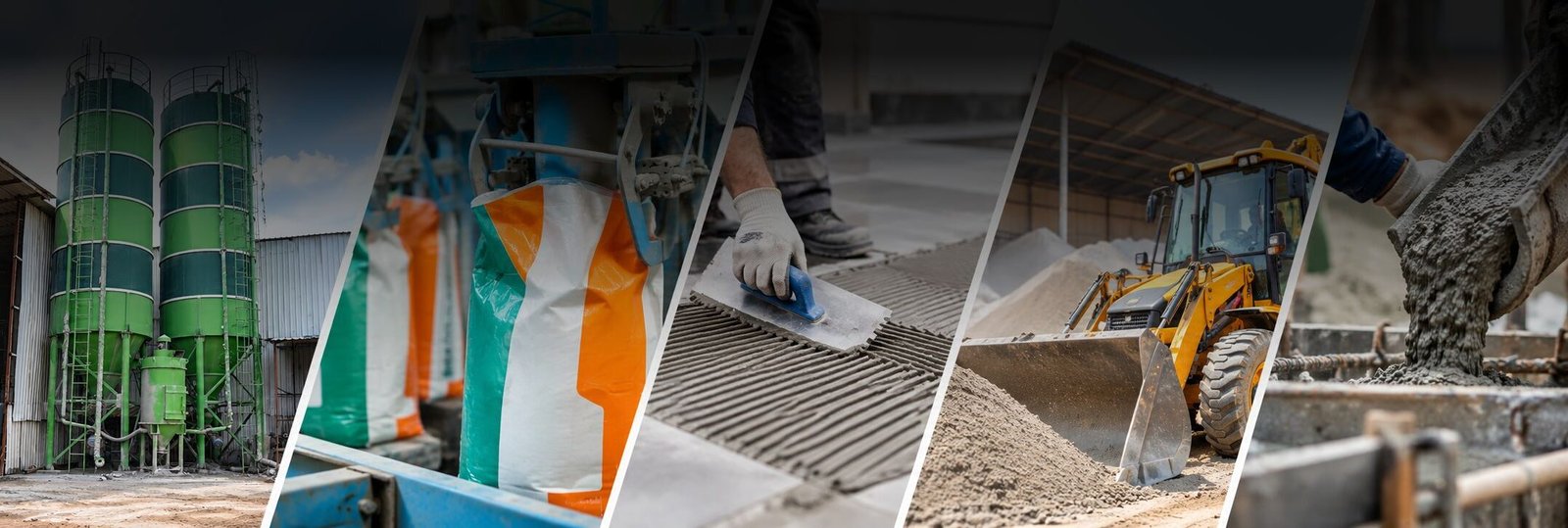
After concrete is placed and finished, curing is essential to protect the young concrete while cement hydration continues. If the surface loses moisture too quickly, the concrete may not develop the intended properties and can become more vulnerable to early-age surface cracking and poor durability.
On large slabs, roads, pavements and structures where continuous wet curing is difficult to manage, contractors may consider a concrete curing compound. A curing compound is not simply another admixture added to the concrete mix. It is generally applied to the surface to form a film that reduces moisture loss. The project specification and product technical data sheet determine whether this method is suitable.
What is a concrete curing compound?
A curing compound is a liquid material applied to a concrete or cementitious surface to form a membrane or film. The film helps reduce evaporation from the surface during the early curing period. Depending on the formulation, curing compounds may be acrylic, resin, wax or another membrane-forming type. The product must be selected for the intended substrate, exposure and future finish.
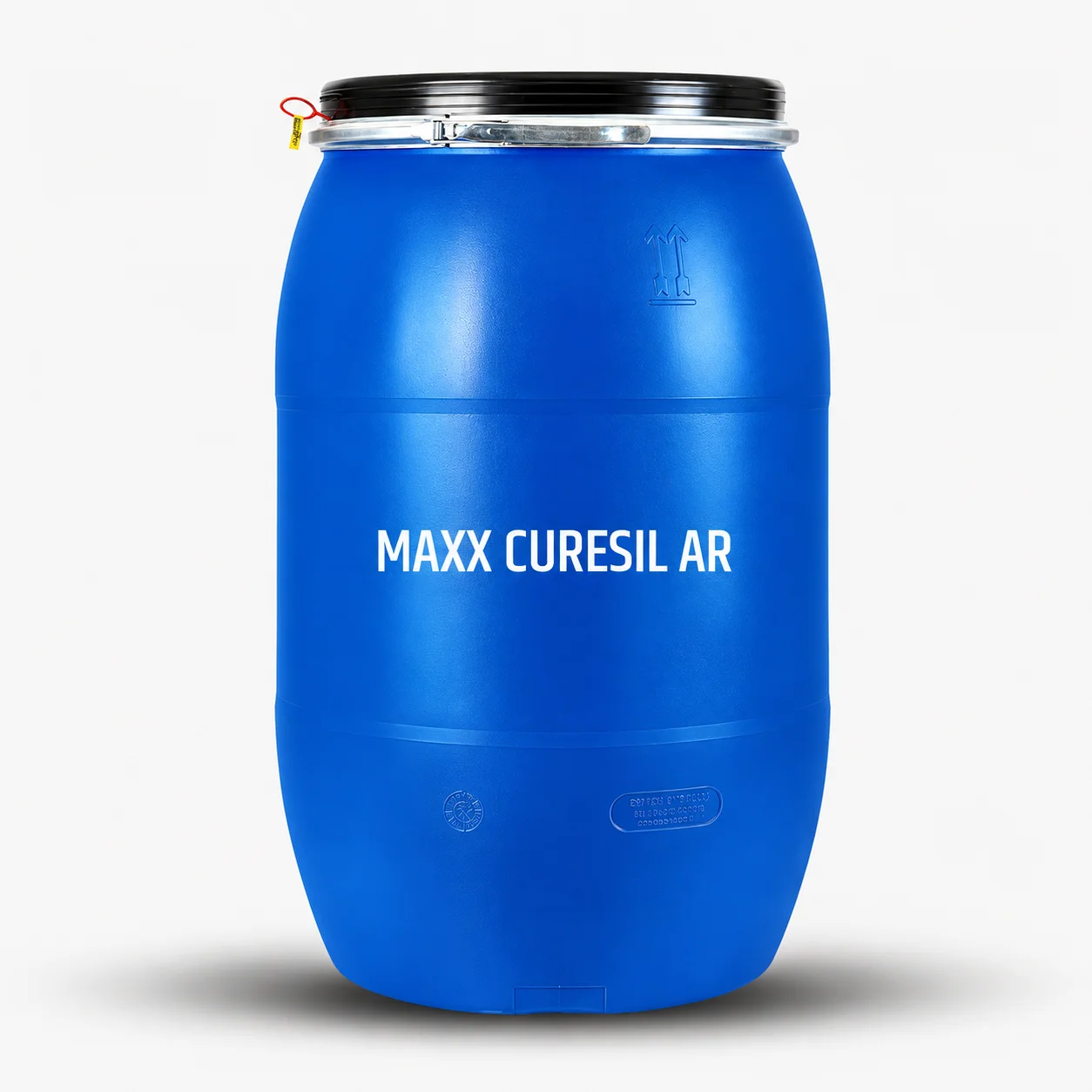
Globe’s Maxx Curesil AR is listed as a ready-to-use, acrylic resin-based curing compound. Its product description says it forms a thin continuous film to reduce moisture loss from freshly placed concrete and cementitious surfaces.
Why is curing important for concrete?
- Supports hydration: retaining moisture helps cement continue to hydrate as the concrete develops.
- Supports strength development: appropriate curing helps the concrete achieve the performance expected from the mix design.
- Helps limit early drying: reducing rapid moisture loss can help reduce the risk of early-age surface cracking and drying-related defects.
- Improves site control: a suitable membrane-forming product can help manage curing on large or hard-to-access surfaces where continuous water application is challenging.
Common concrete curing methods
Water curing
Water curing may be carried out by ponding, spraying or keeping a suitable absorbent covering continuously wet. It is a familiar method for slabs and many cast-in-place concrete elements, but it requires water, labour and regular site supervision.
Membrane-forming curing compound
A curing compound is applied to the prepared surface under the conditions stated in its TDS. After application, the film acts as a barrier that helps reduce moisture loss. This method may be useful on large areas, provided the project specification permits it and the compound is compatible with the next construction stage.
Sheet or covering methods
Polythene sheets and other approved coverings can help reduce evaporation when they are installed and maintained correctly. Edges and overlaps need attention so that the surface is protected consistently.
Where do contractors use curing compounds?
Membrane-forming curing compounds are commonly considered for large concrete surfaces and exposed elements where water curing is difficult to maintain. Application areas may include:
- Industrial floors and large concrete slabs.
- External pavements, driveways and roads.
- Runways and apron areas, subject to the project specification.
- Bridge decks and retaining structures.
- Columns, beams and other exposed cementitious surfaces where the product is approved.
Globe lists these types of applications for Maxx Curesil AR. Confirm whether the selected method is suitable for the concrete finish and any subsequent treatment planned for the surface.
When should a contractor consider a curing compound?
Review the surface area, access to water, labour availability, weather conditions, finishing sequence and project requirements. A curing compound may be practical on broad pavements or floors where continuous wet curing would be difficult to supervise. However, it may not be acceptable on a surface that must bond directly to a later topping, screed, tile adhesive, coating or repair material unless compatibility is confirmed.
Some project specifications allow approved curing compounds as an alternative to moist curing only with the Engineer-in-Charge’s permission. For example, the CPWD Specifications 2019 describe membrane curing as an option subject to approval and product requirements. Always follow the current contract specification and instructions from the engineer.
Contractor’s checklist before applying curing compound
- Check the specification: confirm whether membrane curing is allowed for the element and whether written approval is needed.
- Review the next finish: identify whether tiles, screed, plaster, paint, coating, overlay or repair material must bond to the cured surface. Confirm compatibility or removal requirements before application.
- Read the TDS: check the permitted application stage, substrate condition, coverage, equipment, number of coats, weather limits and protection period.
- Prepare the application area: ensure the concrete finish and surface condition match the product requirements. Do not apply over standing water or at a stage prohibited by the TDS.
- Plan uniform coverage: use the specified application equipment and rate. Missed strips, thin patches or uneven application can reduce the consistency of the membrane.
- Protect the film: prevent damage from foot traffic, rain, dust or follow-on work for the period stated by the manufacturer.
- Record the work: note the product batch, application time, weather, area covered and any site approvals for quality documentation.
How much curing compound is required?
Estimate the quantity using the coverage stated in the current product TDS, not a general industry average. Globe’s product listing for Maxx Curesil AR currently gives an indicative coverage of approximately 1 kg for 40 sq. ft., depending on surface condition and application. Actual consumption can change with the surface texture, application equipment and site conditions. Confirm the current TDS before procurement and do a site trial where required.
Common mistakes to avoid
- Using a curing compound without checking whether the project specification permits membrane curing.
- Applying it to a surface that must receive a bonded topping or coating without verifying compatibility.
- Applying too little material or leaving uncoated patches.
- Applying at the wrong stage of concrete finishing or over a surface condition not permitted by the TDS.
- Allowing the film to be damaged by rain, traffic or subsequent construction activities.
- Assuming all curing compounds have the same coverage, application rate or removal requirements.
Explore Globe’s concrete curing product
Maxx Curesil AR is Globe Construction Chemicals’ ready-to-use acrylic resin-based curing compound, listed for freshly placed concrete and cementitious surfaces. The product page lists pack sizes of 20 kg, 50 kg and 210 kg. Review its current TDS and discuss your project area, finish and curing requirement with the Globe team. Browse the Concrete Essentials category for related products.
Frequently asked questions
Does a curing compound replace water curing?
Only where the project specification and engineer permit the selected membrane-curing method. Do not assume a compound can replace every curing method for every element.
Can a curing compound be applied before tiling?
Check compatibility with the tile adhesive, screed or other bonded layer. A membrane may affect adhesion, so follow the product and finishing-system instructions.
Is a curing compound added to the concrete mixer?
A membrane-forming curing compound is applied to the surface; it is different from an admixture added during concrete mixing.
Can the same curing compound be used on every surface?
No. Select the product for the concrete surface, exposure, next finish and project requirements, and verify the permitted uses in its TDS.
Planning curing for a slab or RCC project? Share the concrete area, surface finish, exposure and planned next layer with Globe Construction Chemicals to review the relevant product information.