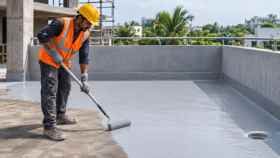
Terrace leakage is one of the most common maintenance problems in buildings. A reliable terrace waterproofing system does more than cover visible cracks: it controls water entry through the roof slab, parapet junctions, construction joints and service penetrations. For contractors, the right method depends on the existing substrate, water exposure, movement, drainage and the condition of the concrete.
Why terrace waterproofing fails
Waterproofing can fail when the surface is dusty or weak, cracks are left untreated, the roof has inadequate slope, drain outlets are poorly detailed, or the coating is applied outside the manufacturer’s recommended conditions. Applying another coat over a failing or damp layer without diagnosing the cause can only hide the problem temporarily.
Common terrace waterproofing methods
1. Cementitious waterproof coating
Polymer-modified cementitious coatings are commonly used on concrete and masonry surfaces. Depending on the formulation, they can provide a protective waterproof layer and may be suitable for selected exposed or covered applications. Confirm flexibility, UV exposure suitability and the required protective finish in the product technical data sheet.
2. Liquid-applied elastomeric coating
Liquid-applied membranes form a continuous layer over prepared surfaces and can accommodate limited movement when the specified system is designed for it. Application thickness, reinforcement at corners and joints, curing conditions and compatibility with the substrate are important.
3. Bituminous membrane systems
Bituminous sheet membranes are used in specified roof and podium applications. Correct detailing at laps, upstands, outlets and penetrations is essential. The selected membrane must suit the exposure and the planned protection layer.
4. Polyurethane waterproofing systems
PU liquid membranes can provide seamless waterproofing for suitable substrates and project conditions. Moisture limits, primer selection, film thickness and UV protection vary by system, so follow the manufacturer’s approved method statement.
Step-by-step terrace waterproofing application
- Inspect the terrace: identify cracks, hollow or weak concrete, ponding areas, damaged joints, parapet junctions and drain locations.
- Prepare the substrate: remove dust, laitance, loose material, oil and contaminants. Repair unsound areas using a compatible repair system.
- Treat cracks and junctions: use the specified crack-repair and joint-detailing method. Reinforce corners, outlets and pipe penetrations where the system requires it.
- Correct drainage: ensure the surface has an effective fall towards outlets. Waterproofing does not replace proper drainage design.
- Apply primer and coating: use only the primer, mixing ratio, coverage rate, number of coats and wet/dry film thickness specified in the product TDS.
- Allow proper curing: protect the applied system from rain, dust, traffic and premature covering during the specified curing period.
- Test before handover: where appropriate, carry out a controlled ponding or water test after the system has cured, following project specifications and site safety requirements.
How to choose the right waterproofing chemical
Before selecting terrace waterproofing chemicals, check whether the project is new construction or repair, whether the surface is exposed to sunlight, whether foot traffic is expected, how much movement is present and what finish will be installed above the membrane. Review the technical data sheet for substrate moisture limits, primer requirements, application temperature, coverage, thickness, curing time and compatibility with screeds or tiles.
Common mistakes contractors should avoid
- Applying coating over loose, contaminated or poorly prepared concrete.
- Ignoring parapet-wall junctions, outlets and pipe penetrations.
- Using an assumed coverage rate instead of the product’s specified consumption.
- Mixing products from different systems without confirming compatibility.
- Allowing traffic or installing a protection screed before the coating is ready.
- Skipping inspection and water testing where required by the project specification.
Conclusion
Long-lasting terrace waterproofing depends on diagnosis, surface preparation, correct detailing, a compatible waterproofing system and careful application. Contractors should select products based on actual site conditions and always follow the latest technical data sheet and approved method statement.
Explore GlobeChem construction chemical solutions or contact the team to discuss the requirements of your project.